Latest LEAD updates
Tokyo meeting explores new pathways for antimicrobial innovation
A global meeting in Tokyo has set out a more coordinated, system-wide vision for strengthening antimicrobial research and development (R&D), bringing together researchers, policymakers, and industry leaders to address persistent challenges in the field.
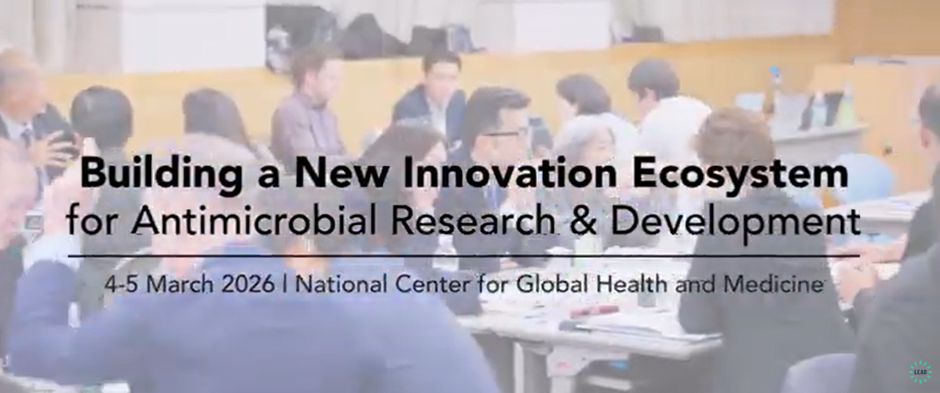
Held on 4 and 5 March 2026, the conference Building a New Innovation Ecosystem for Antimicrobial Research & Development convened by LEAD coalition member, the Sir Howard Dalton Centre at the University of Warwick, UK, alongside partners including the Japan Institute for Health Security (JIHS), the AMR Clinical Reference Centre, and the Academic Research Organizations Alliance for Southeast & East Asia (ARISE), focused on how antimicrobial innovation can be made more resilient and aligned with long-term public health needs.
Rethinking antimicrobial innovation
Participants highlighted that antimicrobial R&D continues to face deep-rooted structural challenges, including a shrinking discovery pipeline, instability in early-stage research, and a disconnect between discovery, development, and deployment. While existing approaches have supported some progress, attendees argued for a broader shift towards strengthening the underlying systems that enable innovation.
This system-centred perspective places emphasis on long-term capabilities such as clinical research networks, surveillance systems, regulatory infrastructure, and sustained scientific capacity as essential public functions that must be maintained and coordinated alongside private sector activity.
Expanding participation in a global ecosystem
A central theme of the meeting was the recognition that antimicrobial innovation is no longer confined to a small group of high-income countries. Participants stressed that a wide range of countries, including those in low- and middle-income settings, already contribute important scientific, clinical, and manufacturing capabilities. This positions countries as co-producers of innovation across the entire R&D lifecycle.
Testing a system-centred model
To explore how a more integrated approach might work in practice, participants engaged in a simulation exercise based on the Nakama Model, which illustrates how antimicrobial R&D could function as a coordinated system bringing together public research, clinical networks, government coordination, and industry partnerships under a shared framework.
The exercise demonstrated how different actors could contribute complementary strengths within a model oriented towards public health needs rather than solely market incentives.
Persistent challenges
Despite the promise of this approach, discussions underscored significant practical challenges, including fragmented and insufficient financing, gaps at critical transition points in the R&D lifecycle, and the need for governance structures capable of coordinating activities across institutions. Political feasibility also remains a key factor shaping long-term investment.
Towards a more sustainable approach
The Tokyo meeting advanced a shared understanding of how system-centred approaches could complement existing models and help address gaps in the current ecosystem. Participants emphasised that sustainable antimicrobial innovation will depend on maintaining the scientific, clinical, and institutional capabilities that underpin the entire process.
The meeting concluded with a call for continued dialogue and engagement with policymakers and funders, highlighting the importance of more coordinated and inclusive approaches to address the growing global threat of antimicrobial resistance.