About LEAD
Who is LEAD?

LEAD: Leadership in Enhancing Antimicrobial Discovery is an international coalition driving leadership, collaboration, and capacity building in R&D to combat AMR.
The challenge we face
The world is facing a shortage of effective antimicrobial treatments due to the increasing prevalence of drug-resistant infections (Antimicrobial Resistance; AMR) and the slow development of new drugs.
LEAD's position
-
Effective antimicrobials are a public good and essential for modern healthcare, requiring sustained government support.
-
Antimicrobial innovation must be revitalised to reverse declining R&D activity and workforce capacity.
-
The antimicrobial R&D ecosystem is fragmented by weak coordination, limited funding, and misaligned incentives.
-
Strategic coordination can increase impact by aligning efforts across government agencies and stakeholders.
-
Scientific advances create new opportunities, but stronger collaboration between academia, industry, and the public sector is needed to realise them.
-
New international partnerships are essential to support a shared global response while recognising different national capacities and responsibilities.
-
Strong leadership is critical to drive a more coordinated and strategic approach to antimicrobial innovation.
LEAD’s Objectives

- Building a cadre of leaders who understand how different parts of the innovation pathway connect and how to strengthen them.
- Generating mutual understanding between leaders in government, scientific centres and private companies, and between countries.
- Contributing to debates on policies and practical approaches for implementing a coordinated approach.
- Supporting new kinds of partnership for antimicrobial discovery and development, both within and between countries.
Our approach
LEAD creates opportunities for potential leaders in the antibiotic discovery ecosystem — based in centres of scientific excellence, government departments, private companies and other agencies — to build their understanding of a strategic approach to innovation and the role their organisation can play.
LEAD then supports these leaders and their organisations to design and implement a strategy for change, which may include building new kinds of partnerships. This includes strengthening the capacity needed for antimicrobial innovation across organisations and supporting stronger connections across the ecosystem.
The aim is to foster and support a strategy for change in individual countries and in international collaborations, to accelerate antimicrobial discovery and development.
International collaboration and diverse partnerships

As LEAD expands globally, its diverse partnerships and alignment with regional initiatives help shape a more coherent ecosystem for antimicrobial innovation.
Through cooperation, capacity building, and leadership development, LEAD enables meaningful engagement across individual, institutional, and international levels - laying the foundation for a resilient and inclusive innovation landscape.
- LEAD fosters next-generation leadership through its bilateral fellowship programme, LEAD Fellows, which emphasises transnational and cross-sectoral perspectives. This approach breaks down silos and promotes shared ownership across government, academia, and industry.
- LEAD also advances low-cost, scalable drug discovery by building public-private partnerships, collaborating with non-profits, and promoting open science.
- Through leadership development, LEAD Fellows become system-level change agents equipped to navigate policy, build coalitions, and drive reform — enabling integrated antimicrobial R&D that responds to public health needs and local realities.
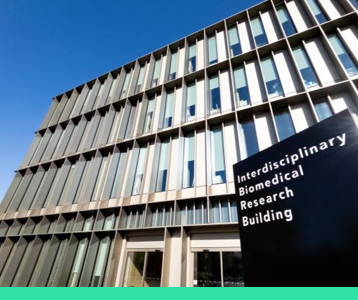
Building on this leadership foundation, LEAD positions its Fellows as vital connectors between discovery science, innovation, and policy. Through structured international exchanges and collaborative learning, Fellows gain insight into the anti-infective discovery ecosystem in both their home and partner countries, while actively contributing to science policy development. Those with a research focus engage in hands-on drug discovery placements with leading UK institutions, accessing advanced infrastructure and mentorship. These exchanges involve multidisciplinary collaboration with teams at the Sir Howard Dalton Centre, Diamond Light Source Synchrotron, and partner laboratories working on structure-guided drug design, AI-driven screening, and early translational research.
LEAD in Action: Our Progress
- Funding from the Great Britain Sasakawa Foundation and the Sir Howard Dalton Centre enabled LEAD to initiate its first activity between the UK and Japan, including AMR Policy
- Fellowships from the UK Health Security Agency (UKHSA) and the Japan Institute for Health Security (JIHS), named after Professor Dame Sally Davies and Mr Yasuhisa Shiozaki.
- It has also set up an innovation program between University of Warwick and Kitasato University for the scientists.
- LEAD has produced reports and briefings and convened meetings with relevant government agencies, leading scientists and private companies.
- Building on this foundation, LEAD has facilitated a range of UK-Japan collaborative activities and engaged in informal exploratory discussions with global stakeholders, including India and China.
- The UK–Japan collaboration demonstrates LEAD’s pragmatic and cost-effective model for advancing antimicrobial innovation through the new kinds of international partnership based on the principle of shared commitment to contribute to a global public good but with differentiated responsibilities.